


Charleston Regional Development Alliance

Berkeley, Charleston & Dorchester Counties

Printed from www.crda.org

Clemson University Restoration Institute

As the first formal academic initiative in the nation focused on the restoration economy, the Clemson University Restoration Institute (CURI) brings together experts and researchers in design, planning, construction management, real estate, historic preservation, materials science, environmental science, forestry and more to advance global restoration methods and technologies.

Master planning is currently underway for the Restoration Institute's North Charleston Research Park, which will offer laboratories and facilities for public-private partnerships, private development, spin-off companies, and other research and development agencies interested in restorative activities.
related information

Wind Turbine TestingRenewable EnergyRestoration EcologyAdvanced MaterialsOther Research Areas
Next-Generation Drive Train Technology
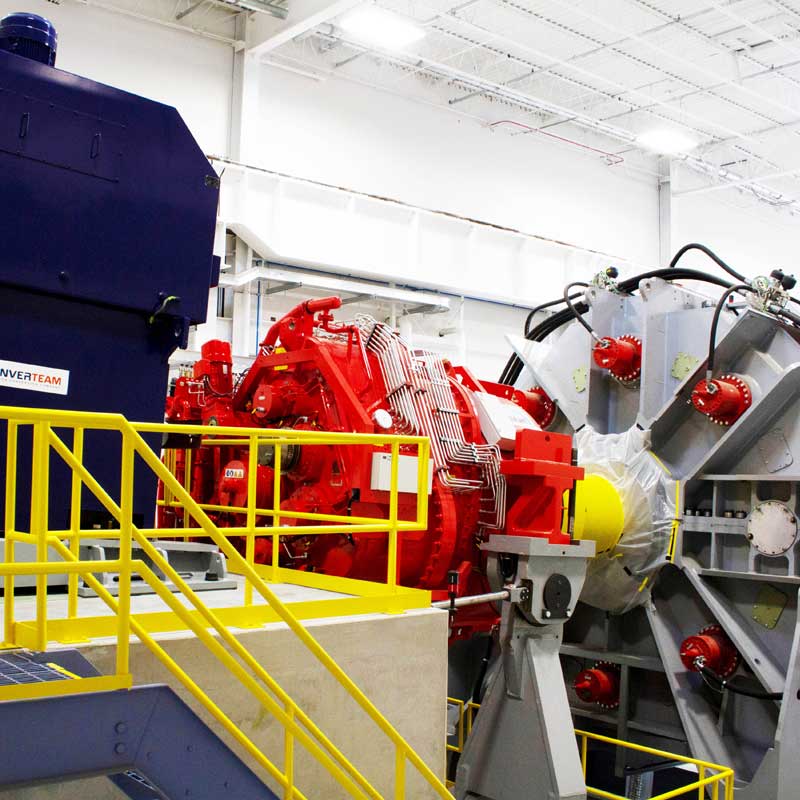
The U.S. Department of Energy is a major funder of a new $98 million Wind Turbine Drivetrain Testing Facility capable of full-scale, highly accelerated testing of next-generation wind turbine technology. The facility is strategically located to serve as a hub for new technology testing and development, and a catalyst for an offshore wind manufacturing hub.

Testing Facility Details
  • 5 megawatt to 15 megawatt range, with a 30% overload capacity
  • 82,264-square-foot former Navy warehouse with rail and ship-handling access
  • Adjacent commercial port operations, on-site fabrication, heavy lifting equipment
  • Available land with rail and deepwater access for large-scale manufacturing
  • Clemson University is a top-ranked research institution for engineering and supercomputing
  • Statewide manufacturing and renewable energy industry, including GE Energy, Fluor, Timken, Ilgin and PPG
Public/Private Partners
  • Charleston Naval Complex Redevelopment Authority
  • State of South Carolina
  • S.C. Department of Commerce
  • S.C. Public Railways
  • S.C. State Ports Authority
  • Savannah River National Laboratory
  • RENK Labeco
  • Fluor
  • SCE&G
  • CMMC LLC
  • EcoEnergy LLC
  • City of North Charleston
  • Tony Bakker
  • James Meadors

In collaboration with a number of public- and private-sector partners, the Restoration Institute is focused on developing new technologies for bio-based and wind-driven energy to reduce our nation's dependence on fossil fuels.

Wind Energy
A $98 million Department of Energy-backed project to build the world's largest testing facility for next-generation wind turbine drivetrains (up to 15 megawatts) is attracting interest from manufacturers around the world. Property surrounding the site is deep-water accessible, served by existing rail lines, and adjacent to commercial port operations via the Port of Charleston.

The Restoration Institute is also a key partner in public/private studies testing the feasibility of small- and commercial-scale wind farms off the coast of South Carolina. Other current projects are focused on integrating renewable energy resources such as wind, solar and hydrogen.

Biofuels
With a rich history in both agriculture and forestry, South Carolina is committed to developing innovative technologies to convert field crops, wood residue and algae into a sustainable biofuels industry. To further this goal, the Restoration Institute is involved with a number of industry partners to develop commercial-scale biofuel technologies with feedstock ranging from switch grass to purpose-grown trees.

One such partnership is a cooperative arrangement with Aborgen, the world leader in tree improvement and commercial production, focused on the development and conversion of cellulose into ethanol. Joint areas of research include exploration of possible sources of biofuel, such as sweetgum, loblolly pine and poplar trees; equipment engineering; field trials; and pretreatment of woody biomass,
Environmental stresses - wind, water, weather - take their toll as do population growth and urban development. The Restoration Institute is focused on technologies to allow for sustainable economic growth while preserving, restoring and conserving a community's natural resources.

Watershed Management
Designated as a Center of Excellence for Watershed Management by the U.S. Environmental Protection Agency, the Restoration Institute's Center for Watershed Excellence is the first such center in the nation focused on using wireless sensors for real-time monitoring, analysis and management of water resources.

This digital watershed management system, called The Intelligent River©, incorporates a network of off-the-shelf and custom-designed sensors to measure and report on water quality, soil moisture, weather, water level, tree girth and additional environmental parameters. The system allows for 24/7 access to data and visualization products via a web-based reporting tool.

Ecosystem Restoration
The Restoration Institute is also focused on developing and deploying new technologies to restore compromised ecological systems, including:
  • Ecosystem restoration for rivers, wetlands, estuaries and coastal environments
  • Remediation methods for abandoned industrial sites or brownfields
  • Practices to prevent and manage water pollution caused by stormwater runoff
  • Forest and wildlife habitat regeneration and management emissions

World-wide, construction materials consume three billion tons of raw materials (or 40% of total global use) each year. In its advanced materials work, the Restoration Institute is focused on developing new methods and materials to lessen demand on these finite resources.

Submerged Metals
For the past several years, an international team of scientists has been working to conserve the H.L. Hunley submarine and its artifacts (circa 1864). To support their work, the scientists have developed advanced engineering techniques to remove and prevent corrosion on the Hunley's saltwater-exposed metal surfaces. Future applications for these technologies could include protecting sea-going ships, offshore oil rigs and steel bridges exposed to saltwater.

Intelligent Materials
Partnering architecture, materials science and engineering, Clemson's Intelligent Materials and Systems for Architecture group is focused on the design, development and evaluation of intelligent materials and systems for architecture. One such project, with funding from the National Science Foundation, is working to develop design guidelines for integrating phase change materials into the built environment. These materials have the ability to store excess heat and release it at a later time, thereby reducing temperature fluctuations as well as heating and cooling loads.
Healthy Communities & Buildings
Conducts research in the design, planning, and management of communities for health living. The scope of work includes:
  • Planned integration and management of watersheds, urban forests, multi-modal transportation systems, and other land uses for air and water quality
  • Planning and design of walkable and safe neighborhoods
  • Design of "green," LEED-certified healthcare facilities and therapeutic landscapes and gardens
  • Design and construction of healthy buildings, in particular schools, with maximum natural daylight and interior products finished with low toxic emissions
Source: CURI website
Community revitalization
Research in the design, planning, and management of communities.
This expertise will be applied to assist communities in sustaining and restoring essential environmental, social and cultural qualities as those areas undergo change caused by population growth, economic fluctuations, various types of disasters, and other causes that influence community health.

Historic Preservation and Materials Conservation
Research in restoration and preservation of historic structures, landscapes, and artifacts in the United States and abroad.
Historic preservation scientists are involved in the documentation, preservation and restoration of large-scale historic landscapes and cityscapes; the development of new practices for integration of preservation in land-development practices, policies and financing; and the stabilization and care of materials such as cloth, masonry, wood, metal and composite artifacts.

Resilient Infrastructure
Research on sustainability in the built environment.
Scientific inquiry and applications center on issues such as resilience of buildings, bridges, power grids, water supply and sewer lines, as well as mitigation of beach erosion. New materials and construction methods are coupled with sensor technology and dedicated communication techniques to provide for a safer and more efficient infrastructure within communities.